


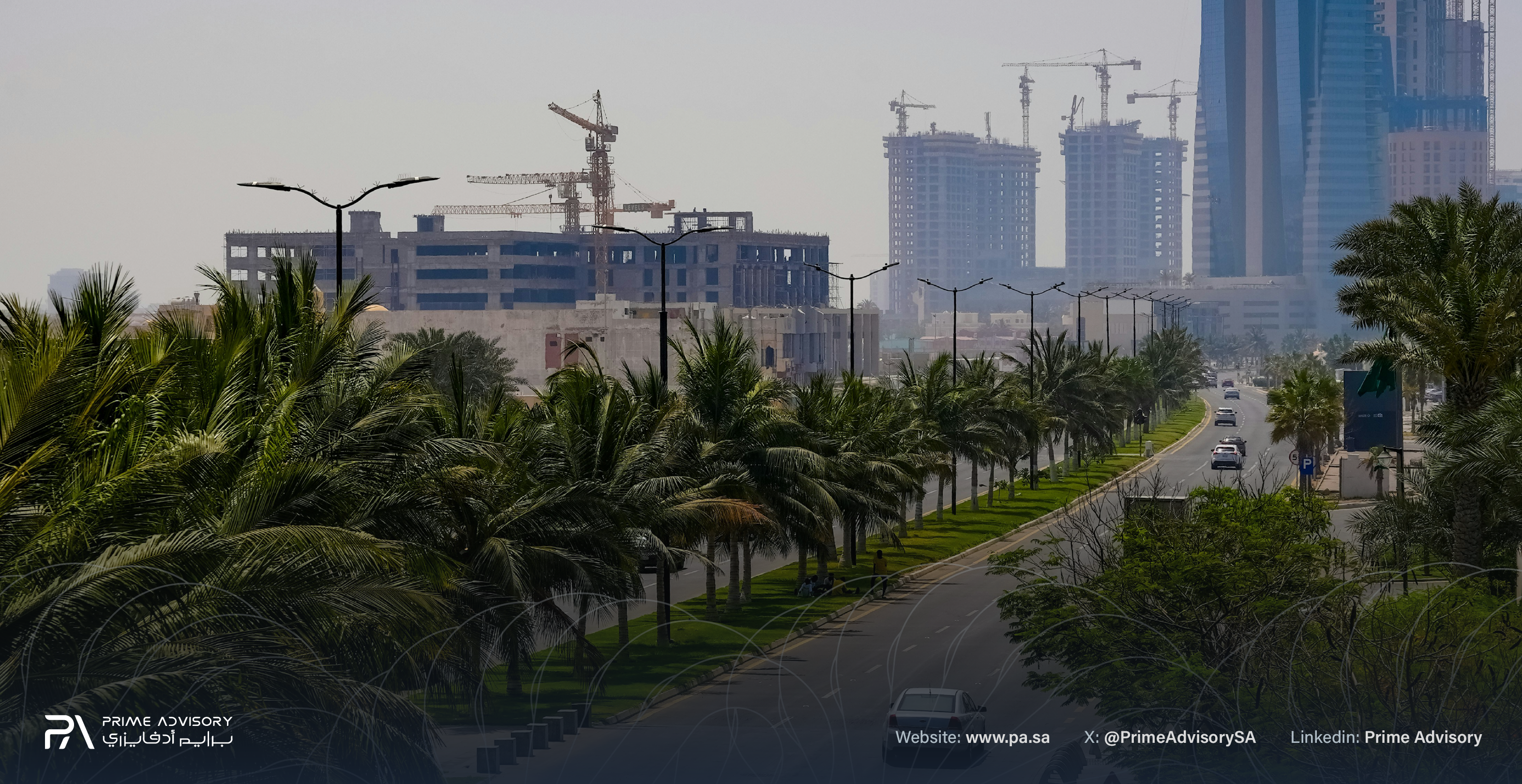
The announced capital commitments in Saudi construction sector that translates into active project pipeline is estimated to be USD 1 trillion. Despite the current structural upward pressure resulting from supply constraints, the real estate sector powers 7% of Saudi GDP in a leading property expansion. This is part of the success that has seen non-oil expand by 2.9% in Q1, 2026 reflecting a promising future.
Saudi Arabia’s real estate sector that has reached a landmark milestone, officially contributing 7% to the nation’s total Gross Domestic Product (GDP). Long recognized as a byproduct of economic strength, property development has now evolved into one of the principal engines driving Saudi Arabia’s non-oil growth. This accomplishment marks a crucial turning point in the Kingdom’s economic diversification agenda. Supported by structural policy reforms, massive capital investment, and skyrocketing urban demand, real estate is positioning itself as a cornerstone of the Gulf region’s most dynamic economy.
Vision 2030 and the Non-Oil Transformation
At the heart of this milestone is Vision 2030, Saudi Arabia’s strategic blueprint designed to reduce reliance on crude oil revenue. Central to this vision is a target to raise the real estate sector’s GDP contribution even further aiming for 10% by 2030.
The Public Investment Fund (PIF) and government-backed master developers are pouring hundreds of billions into transformational mega-projects (“giga-projects”). Projects like NEOM, Diriyah, The Red Sea, and Qiddiya are not merely urban developments; they are entire economic ecosystems created to generate long-term commercial, residential, and industrial activity.
Furthermore, government efforts to boost local homeownership set a target of 70% homeownership among Saudi citizens by 2030. This initiative unlocked unprecedented domestic demand for residential units, executed in large part through the National Housing Company (NHC).
Key Growth Drivers Behind the Real Estate Numbers
Several core factors are maintaining this momentum across residential, office, and hospitality property segments:
Rapid Urbanization & Demographics: Over 50% of the GCC’s total population resides in Saudi Arabia, with a young demographic accelerating the formation of new households.
Population growth: The population growth expected to reach 4o million by 2030 provides a reasonable ground for sustained housing demand. This will influence an upward growth in the real estate sector.
Commercial & Prime Office Shortages: Under Regional Headquarters (RHQ) mandates, hundreds of international corporations have relocated their regional hubs to Riyadh. This influx has pushed prime office occupancy rates near full capacity, driving upward rental pressure and new commercial developments.
Expansion of Retail & Hospitality: As Saudi Arabia expands its tourism sector, hotel key capacity and lifestyle-oriented retail developments are growing at breakneck speed in key hubs like Riyadh, Jeddah, Makkah, and Madinah.
Opening the Doors to Foreign Direct Investment (FDI)
Historically reserved for domestic and GCC buyers, Saudi Arabia’s real estate market has undergone sweeping regulatory modernization. Updated regulations surrounding non-Saudi property ownership are making it significantly easier for international investors and corporate entities to acquire assets within designated geographic zones.
These policy updates serve two strategic goals:
Attracting Foreign Capital: Diversifying source funding for long-term construction pipelines.
Boosting Market Transparency: Introducing standardized real estate laws, escrow frameworks, and modernized land registration through the Real Estate General Authority (REGA).
In Sum…
Achieving a 7% contribution to national GDP confirms that the real estate sector is no longer absorbing government spending. The sector is actively compounding economic value.
As the country prepares for major global events like Expo 2030 in Riyadh and continues the physical delivery of its mega-cities, demand for commercial, residential, and logistics space will remain robust. For domestic buyers, regional businesses, and international fund managers, Saudi Arabia’s real estate sector stands out as one of the most compelling long-term expansion stories in the global market.